
Lyft review
 Analysis by GetAllApps
I see Lyft as a practical ride-hailing app for people who want a car trip without arranging one by phone or relying on a friend. Its strength is convenience: you can request a ride in the app and manage the trip from the same place. That makes it useful for everyday journeys, especially when driving yourself is inconvenient. It is not a universal answer to getting around, though. Availability depends on having drivers nearby, and for a short trip with good public transport, a bus or train may still be simpler and cheaper.
Where Lyft earns its place in a travel routine
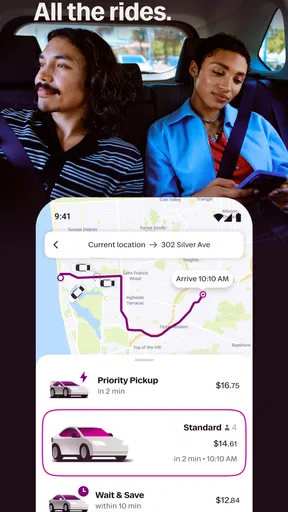
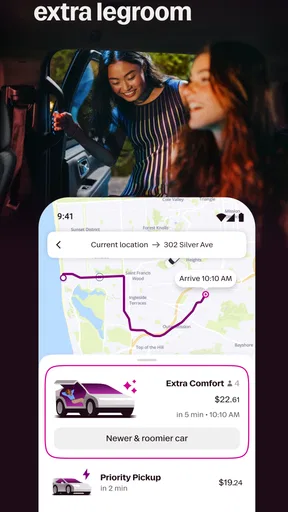
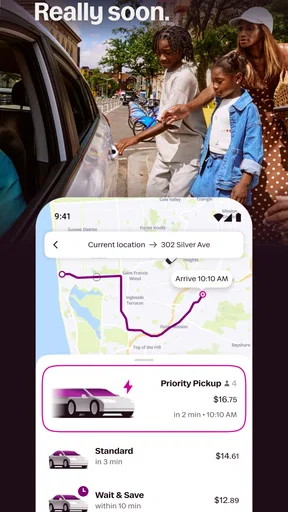
Lyft is a free Maps & Navigation app from Lyft, Inc. Its focus is narrower than a conventional map app: rather than primarily helping me explore routes or navigate while driving my own car, it connects a passenger with a driver for a ride. I would treat it as a transport option to keep ready for moments when walking, transit, or driving myself does not fit the situation.
A realistic example is leaving work late with a bag, tired and not keen to wait outdoors for a connection. I can use the app to request a ride rather than negotiate a pickup by text. That does not guarantee an instant arrival—the experience still depends on local driver availability—but it gives the trip a clear starting point and makes Lyft useful as a backup even for someone who usually takes transit.
The service has a substantial audience: it has more than 50 million installs, an average rating of 4.8, and about 715,000 ratings. Those figures suggest that many people use and rate it, but they are not a promise that every ride will be smooth. The quality of a ride-hailing experience can vary with location, time, traffic, and the individual trip. I would read the strong overall reception as a reason to consider the app, not as a substitute for checking whether it suits the journey I actually need to make.
Its design is best understood as a way to arrange point-to-point transport, not as a replacement for all the tools involved in travelling. A map app is more helpful when I am comparing walking routes or learning the shape of an unfamiliar neighborhood. A transit app is often better when I need to understand schedules and connections. Lyft makes the most sense when the practical question is simply how to get a car ride from where I am to where I need to be.
A useful option, not a guaranteed shortcut
The appealing part is the reduced coordination. I do not have to call around for a ride or ask someone to change their plans. That matters after an evening out, when carrying something awkward, or when the weather makes walking unpleasant. The app’s core purpose is easy to grasp, which is a real advantage when I am using it under time pressure rather than browsing transport options for fun.
Still, a ride request is not the same as a confirmed arrival at a precise time. If I have a flight, medical appointment, or other commitment where arriving late would be costly, I would build in a generous buffer and consider a more dependable backup. A nearby driver can make the service feel quick, but demand and local conditions can change the wait. For an important trip, I would not make my entire plan depend on the most optimistic estimate shown in an app.
That distinction is worth keeping in mind when deciding whether to install it. Lyft can make an available ride easier to arrange; it cannot remove traffic, create drivers in an area where few are working, or make a car the best choice for every route. I find it most convincing as one layer in a travel plan, alongside transit, walking, and a little extra time.
What to consider before requesting a ride
Before relying on Lyft for a particular trip, I would think about the pickup itself. A crowded venue, a busy curb, or a large building can make it harder to meet a driver than the map pin suggests. Moving to a safe, clear pickup point and checking the surroundings before requesting can reduce confusion. This is a small practical step, but it often matters more than tapping through the request quickly.
I would also decide whether a car is worth the convenience for the whole journey. For a very short distance, walking may be easier than waiting for a pickup. For a route served by a direct train or bus, public transit may avoid road delays. Conversely, when I have luggage, am travelling with someone who has difficulty walking, or need to reach a place poorly served by transit, a ride can be a sensible trade-off even if it is not the most economical option.
One useful habit is to check the ride details and destination carefully before setting off, especially when I am tired or booking from a noisy place. Small errors are easy to make when moving quickly. I would also keep my phone charged enough for the pickup and trip, since the app is central to arranging the ride and staying oriented. These are ordinary precautions, but ride-hailing is less convenient when the device used to organize it is about to run out of power.
Limits that shape the recommendation
The biggest limitation is that the app’s usefulness is uneven from place to place. In a busy area with drivers nearby, it can be a handy way to get moving. In a less-served location, the same request may be less practical. I would not assume that installing Lyft means a ride will be available wherever I travel; I would keep another way to get around in mind, particularly outside familiar areas or at unusual hours.
There is also a trade-off in choosing a car over a route I control myself. Traffic can make a ride slower than rail, and pickup time adds another step before the journey begins. Someone who likes to plan around fixed transit schedules may prefer a transit app, while a driver who mainly needs turn-by-turn directions should use a navigation tool designed for that purpose. Lyft is not trying to be either of those things, and judging it by those standards would miss its narrower role.
Cost is another reason to compare options at the moment of travel. The app itself is free to download, but that does not mean every ride is free. Before committing, I would check the trip information presented in the app and compare it with the time and effort involved in transit or walking. That quick check helps avoid treating convenience as automatically worth the expense, especially for routine trips where alternatives are easy.
For people who prefer to do all their travel planning in one place, Lyft may also feel limited. It is a ride service rather than a broad trip-planning hub, so I would not rely on it to answer every question about a journey. I might use a map to choose a meeting point, a transit tool to compare connections, and Lyft only when a car is the right leg of the trip. That combination is often more useful than expecting one app to handle everything.
Who is likely to get the most from it
I would recommend Lyft to people who regularly need occasional car rides and want a straightforward way to arrange them. It can be especially useful as a fallback for commuters whose usual route sometimes fails, people heading home after an evening out, or visitors who want a direct ride rather than figuring out local transit with bags in hand. It also suits anyone who values the option of requesting a ride without having to organize a pickup through personal contacts.
It is a less compelling choice for someone whose journeys are almost all short, walkable, or well covered by public transport. If I were trying to minimize travel costs above convenience, I would compare the alternatives each time instead of treating rides as the default. Likewise, if I needed a navigation app for cycling, detailed route exploration, or driving my own vehicle, Lyft would not be my primary tool.
Lyft is rated for Everyone, and its broad availability on mobile makes it accessible to a wide range of users, but the practical experience still depends on being comfortable using an app to arrange transport and having a workable connection and charged device. I would help a less confident family member understand the pickup process before they needed it in a hurry. A quick, calm first use is better than trying to learn the interface while standing outside an unfamiliar building.
The app’s history also gives context: it was released on August 28, 2012, and the current version is 2026.40.3.1791962843. I would not choose it based on version numbers alone; what matters more is whether it works reliably for the trips and neighborhoods I actually use. Its long-running presence and large audience make it a familiar option, but my recommendation remains local and practical: install it if an on-demand ride could solve a real transport problem for you.
A balanced verdict for everyday travel
My overall view is that Lyft does one specific job well: it gives people a convenient way to request a car ride when they do not want to drive or cannot easily use another mode. I like it most as a flexible backup rather than a daily solution for every trip. Its simplicity is valuable when the alternatives involve awkward coordination, but it does not erase the uncertainty of driver availability, traffic, pickup logistics, or the cost of choosing a car.
For a first-time user, I would start with a familiar, low-pressure journey, check the destination and pickup point, and compare the ride with transit or walking before confirming. That gives a realistic sense of whether Lyft fits your area and routine without making an important appointment the test case. If convenient car access is a recurring need, the app is worth keeping available. If your routes are already easy by foot or public transport, you may rarely need it—and that is a good reason not to make it your default.
In short, I recommend Lyft to people who want an extra transport option that can turn a planned pickup into an app-based request. I would skip relying on it as the sole plan for a time-critical journey or as a substitute for route planning. Used with sensible expectations and a backup when it matters, it is a useful piece of a broader travel routine rather than a complete solution to getting around.
Pros and cons
Pros
- Upfront fare estimates make it easier to compare ride costs.
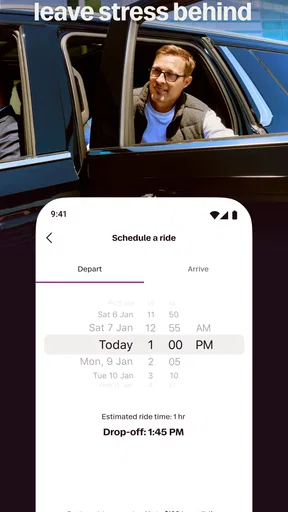
- Scheduled rides help plan trips in advance.
- Ride tracking lets you follow your driver on the map.
- In-app payments avoid handling cash with drivers.
- Driver and vehicle details help identify your ride.
Cons
- Fares can rise during periods of high demand.
- Ride availability may be limited outside busy areas.
- Pickup times can vary with traffic and driver supply.
- Cancellation fees may apply after a driver accepts.
- Some features may differ by city or region.


